Commercial VRF Air Conditioning Systems in the Philippines: The 2026 B2B Guide
For commercial real estate developers, hotel administrators, and facility managers across the Philippines, operational profitability is under constant threat. Steadily rising commercial power rates—among the highest in Asia—mean that legacy central cooling systems are literally eating into your bottom line.
To future-proof your building’s energy consumption and maintain optimal cooling under extreme tropical conditions, upgrading to an advanced inverter system is no longer optional. For building owners and facility managers, partnering with a reliable VRF air conditioning supplier is the most strategic move to drastically reduce operational expenses (OPEX).
In this comprehensive B2B guide, we cut through the marketing noise to explain how this technology works, evaluate its true ROI for the Philippine market, and uncover the climate-specific maintenance realities you must consider before investing.
What is a VRF Air Conditioning System?
How Inverter VRF Technology Works
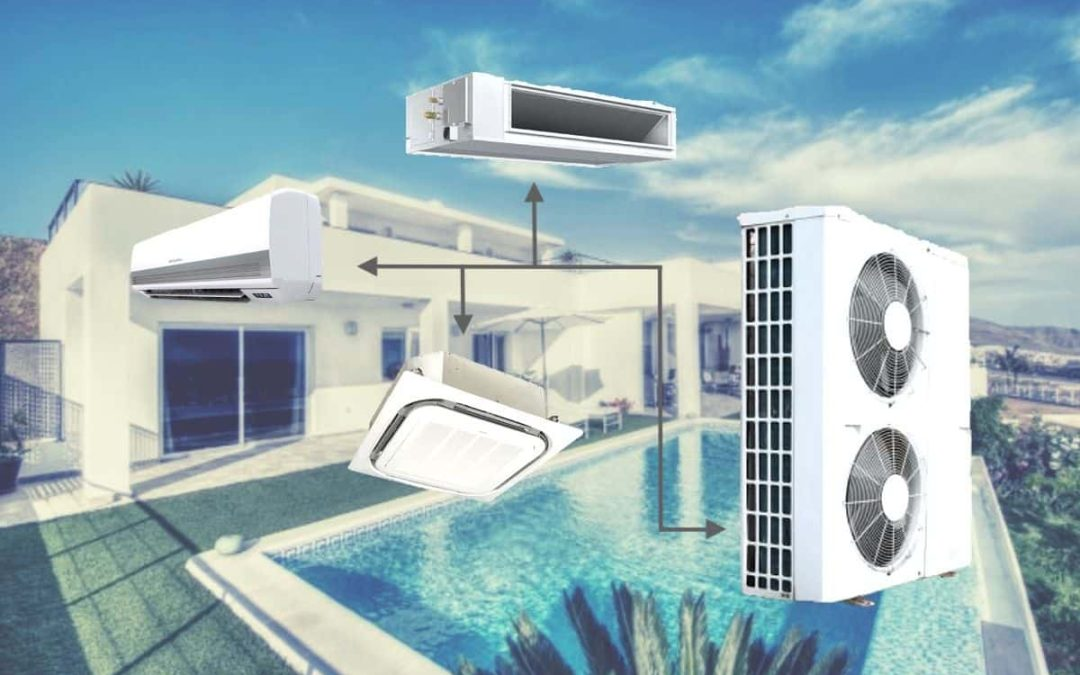
A Variable Refrigerant Flow (VRF) system is a sophisticated, enterprise-grade HVAC architecture that uses refrigerant as its primary cooling medium.
Unlike traditional fixed-speed commercial air conditioners that operate on a highly inefficient “all-or-nothing” cycle, a VRF multi split system utilizes advanced inverter-driven compressors. This intelligent compressor dynamically adjusts its speed to deliver the exact volume of refrigerant required by each independent room based on real-time thermal loads. The result? Pinpoint temperature control and zero wasted electricity.
VRF vs. VRV: Clearing the Industry Confusion
During your procurement process, local contractors will often use the terms “VRF” and “VRV” interchangeably. Here is the industry truth:
VRV (Variable Refrigerant Volume): This is a registered trademark exclusively owned by Daikin, the pioneer of the technology.
VRF (Variable Refrigerant Flow): This is the generic industry term utilized by all other global manufacturers (such as Tongxing, Koppel, and LG).
Technologically speaking, a VRF vs VRV comparison yields no difference; they operate on the exact same principles of variable refrigerant delivery.
Why Philippine Businesses are Switching to VRF
Defeating High Meralco Commercial Rates
When paying premium Meralco commercial tariffs, energy-efficient cooling is the fastest path to profitability. A traditional chiller plant or large ducted AC wastes massive amounts of power overcooling empty spaces.
Because an inverter central AC system features independent zone control, it only cools occupied rooms. Furthermore, VRF systems excel at part-load efficiency. When operating at partial capacity, a VRF system can consume 30% to 40% less electricity than a conventional commercial cooling solution, providing immediate relief to your monthly OPEX.
Space-Saving Design for Metro Manila Real Estate
In prime business districts like BGC and Makati, every square meter of real estate is incredibly valuable. Traditional chilled-water systems require massive mechanical plant rooms, cooling towers, and thick sheet-metal ductwork.
VRF systems eliminate this bulk. They utilize ultra-slim copper piping and compact, modular outdoor units that can be easily stacked on a rooftop. This architectural flexibility frees up valuable space that can be converted into revenue-generating, leasable commercial areas.
Overcoming the Philippine Climate Challenges
Standard global SEO articles will tell you VRF is perfect, but deploying tropical HVAC systems in the Philippines requires overcoming severe environmental hurdles.
Anti-Corrosion for Coastal & Typhoon-Prone Areas
The Philippines is an archipelago constantly battered by typhoons and corrosive sea breezes. A standard outdoor unit installed in coastal areas like Manila Bay or Cebu will literally rust through within one to two years due to salt air exposure.
When specifying an anti-corrosion AC for a Philippine commercial project, you must demand outdoor units treated with heavy-duty Gold Fin or Blue Fin coatings. These specialized hydrophilic layers protect the sensitive aluminum condenser coils from salt, rain, and corrosive elements, drastically extending the system’s lifespan.
Managing Extreme Humidity
With year-round relative humidity frequently exceeding 80%, Philippine commercial spaces battle a constant threat of mold, condensation, and “sticky” indoor environments. A high-end VRF system’s smart temperature controls do more than just cool the air; they provide exceptional dehumidification. By precisely regulating the evaporator coil temperatures, VRF systems strip excess moisture from the air, protecting your expensive office fit-outs and ensuring superior occupant comfort.
Expert Insight: “In the Philippines, a high Meralco bill isn’t your only enemy—corrosive sea breezes and extreme humidity will destroy standard commercial ACs within years. A tropicalized VRF is an investment in both energy efficiency and longevity.” — (Aligns with PSVARE efficiency standards)
VRF vs. Traditional Chillers: ROI Analysis in the Philippines
Is the high initial VRF installation cost in the Philippines justified? Let’s compare the Total Cost of Ownership:
| Metric | VRF System | Water-Cooled Chiller | Traditional Ducted AC |
| Initial Cost (CAPEX) | High | Very High | Moderate |
| Monthly Electricity (OPEX) | Lowest (Highest Efficiency) | Moderate | Very High |
| Space Requirements | Minimal (Copper pipes) | Massive (Plant rooms) | Large (Bulky ducts) |
| Maintenance Complexity | Specialized | High (Water treatment) | Moderate |
While the initial CAPEX for a VRF system is higher than standard ducted units, the massive monthly electricity savings flip the script. For a typical mid-rise office building or hotel in the Philippines, the Return on Investment (ROI) crossover point typically occurs within 3 to 5 years.
Choosing the Right VRF Partner: The Maintenance Reality
The biggest mistake developers make is choosing equipment based solely on the lowest quote, ignoring the reality of VRF maintenance in the Philippines.
Industrial VRF systems utilize closed-loop communication software and sensitive mainboards. You cannot hire generic aircon technicians to troubleshoot a communication bus error. When evaluating HVAC contractors, you must audit their spare parts inventory and verify that their technicians hold factory-certified diagnostic training.
Need a system designed specifically for the Philippine climate? Consult our VRF engineering team today for a free facility assessment and custom HVAC layout.
Frequently Asked Questions (FAQ)
Can VRF systems be connected to solar power in the Philippines?
Yes. Because VRF systems use highly efficient DC inverter compressors with no starting surge, they integrate perfectly with the commercial solar PV setups that are becoming increasingly popular across the country.
What is the lifespan of a VRF system in a tropical climate?
When equipped with proper anti-corrosion coatings and subjected to strict, routine commercial maintenance, a high-quality VRF system will reliably operate for 15 to 20 years.
Does a VRF system require regular Freon charging?
No. A VRF system operates on a hermetically sealed copper piping network. Unless there is a physical leak caused by poor installation or external damage, the system never needs its refrigerant “topped up.”