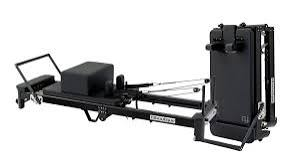
Foldable Pilates Reformer: How to Choose the Right Space-Saving Machine
A Pilates reformer can bring more resistance, exercise variety, and body support to a home workout, but there is one practical problem: space. A full-size reformer can be more than 8 feet long, which may be difficult to leave permanently in a bedroom, apartment, multipurpose room, or home office.
That is where a foldable Pilates reformer can make sense.
A folding Pilates reformer is designed to provide many of the core functions of a conventional reformer while allowing the frame or carriage system to be folded or stored when it is not being used. Current consumer testing and buying guides increasingly include foldable models as solutions for smaller home gyms. Forbes, for example, specifically highlights folding designs for users who need to reclaim floor space after a workout.
However, “foldable” does not automatically mean “better.” The right machine still needs adequate stability, a suitable carriage, reliable resistance, comfortable padding, and a folding mechanism that is practical for your home.
Here is what to consider before buying a pilates reformer foldable model.
What Is a Foldable Pilates Reformer and How Does It Work?
A foldable Pilates reformer is a reformer designed with a folding or compact-storage mechanism. Like a conventional reformer, it typically uses a moving carriage, springs or resistance cords, ropes or straps, pulleys, a footbar, and shoulder rests to create resistance-based Pilates exercises.
During a workout, the reformer functions much like a standard machine. You can perform movements such as footwork, leg presses, bridging, arm work, core exercises, and controlled stretching while the carriage moves along its track.
The major difference is what happens after your workout.
Instead of occupying its full footprint all day, a folding model can usually be collapsed into a smaller configuration and moved against a wall, into a corner, or into another storage area. Some models also incorporate transport wheels to make repositioning easier.
This makes a folding reformer particularly interesting for people who want a dedicated reformer but do not have a permanent Pilates room.
It is worth remembering that the folding mechanism is only one part of the equipment. A well-designed machine still needs to feel secure when opened and locked into the workout position.
How Is a Foldable Reformer Different From a Traditional Reformer?
The primary difference is storage rather than the basic Pilates movement system.
A traditional studio reformer is generally designed to remain assembled in one location. Its heavier construction can contribute to a stable feel, but it also makes the equipment harder to move.
A foldable model adds a mechanism that allows the equipment to become more compact. This can reduce its everyday footprint, but it also means buyers should pay closer attention to hinges, locking points, frame construction, wheels, and overall weight.
In other words, the best folding design is not simply the one that folds the smallest. It is the one that balances storage convenience with workout stability.
What Types of Folding Designs Are Available?
Folding reformers can use different approaches.
Some fold upward or vertically, allowing the reformer to stand closer to a wall. Others fold at a central point or use a collapsible frame to reduce their overall length.
There are also lightweight compact designs that prioritize easy transportation, while heavier wooden models may prioritize a more substantial feel during exercise.
When comparing models, look at both the folded dimensions and the unfolded dimensions. A reformer that stores compactly may still require significant clearance around it during actual workouts.
Why Choose a Foldable Pilates Reformer for Home Use?
The strongest reason to consider a folding Pilates reformer is simple: your workout equipment does not need to occupy your entire room permanently.
Imagine a person living in a two-bedroom apartment. The spare room serves as an office during the day and a workout space in the evening. A permanent reformer could interfere with the desk, chair, or walking area. A foldable model allows the user to set up the equipment for a session and store it afterward.
The same idea works in a guest room, basement, bedroom, or multipurpose family room.
There is also a consistency advantage. If your reformer is easier to store and retrieve, you may be more willing to use it regularly rather than treating it as equipment that is difficult to access.
Research on Pilates supports the value of consistent practice, although results depend on the type of Pilates, frequency, individual characteristics, and study design. A systematic review of randomized controlled trials found improvements in abdominal muscular endurance among healthy adults who performed Pilates two to three times per week over several weeks, compared with no exercise.
That does not mean a folding reformer itself produces better results. Its potential advantage is practical: it can make a reformer-based routine easier to fit into a real home environment.
Is a Foldable Reformer Better for Small Spaces?
For many small-space users, it can be a practical alternative to a permanently installed reformer.
The important measurement is not only the folded footprint. You also need enough room to safely get on and off the machine and fully extend your body during exercises.
For example, Forbes lists one 2026 foldable model at approximately 103 inches long when open and 28 × 18 × 64 inches when folded. This illustrates why shoppers should compare both operating and storage dimensions rather than looking only at the folded size.
Can It Provide a Full-Body Pilates Workout?
A quality folding reformer can support a broad range of reformer exercises.
The moving carriage and adjustable resistance can challenge the legs, glutes, core, shoulders, arms, and back. The ropes and straps also create exercise options that are difficult to reproduce with a simple mat.
However, the exact exercise range depends on the machine. A model with an adjustable footbar, multiple spring settings, adjustable ropes, and a suitable carriage generally provides more versatility than a basic compact model.
What Should You Look for When Buying a Foldable Pilates Reformer?
When comparing a folding Pilates reformer, think beyond the word “foldable.” The following specifications have a direct impact on everyday usability.
| Feature | What to Check | Why It Matters |
| Frame | Wood, aluminum, or steel construction | Influences stability, weight, and durability |
| Weight capacity | Manufacturer-rated maximum load | Helps determine whether the machine suits different users |
| Carriage | Length, width, padding, and travel | Affects comfort and exercise range |
| Springs | Number, resistance levels, and quality | Determines how resistance can be adjusted |
| Footbar | Fixed or adjustable positions | Affects exercise variety and user fit |
| Folding system | Hinge, locking mechanism, folded dimensions | Determines storage convenience |
| Wheels | Integrated transport wheels | Makes repositioning easier |
How Important Are Frame Stability and Weight Capacity?
Stability is especially important when choosing a foldable machine because the frame must serve two purposes: remain secure during exercise and allow convenient storage.
A heavier frame may feel more planted, while a lighter aluminum or steel design can be easier to move. Neither material is automatically superior; construction quality, frame geometry, locking points, and weight distribution also matter.
Check the manufacturer’s stated weight capacity and compare it with the intended user’s body weight and workout style.
For perspective, Forbes’ 2026 reformer guide lists a 300-pound capacity for its featured folding model and a 350-pound capacity for its overall pick.
What Spring, Carriage, and Footbar Features Matter?
Springs are one of the most important parts of a reformer because they provide adjustable resistance.
Look for clearly differentiated resistance levels and springs that feel consistent through the carriage’s range of motion. The carriage should move smoothly without excessive noise, sticking, or unnecessary lateral movement.
The footbar deserves similar attention. An adjustable footbar can accommodate different body proportions and exercise positions. Women’s Health also identifies spring resistance, size, durability, and setup as important considerations when evaluating reformers.
If two models have similar prices, a more adjustable footbar and a wider range of resistance can make one more useful over the long term.
How Do You Evaluate Folding, Wheels, and Storage?
This is where a foldable reformer should be judged differently from a standard reformer.
First, measure the space where you plan to store it. Then measure the actual workout area.
Next, consider how frequently you will fold the machine. If you expect to fold it after every workout, the process should be straightforward enough that it does not become a daily inconvenience.
Transport wheels can also make a noticeable difference. A 100-pound machine may technically be movable, but carrying it repeatedly is very different from rolling it across a room.
Pay attention to the folded height as well. A model that fits under a bed may be unsuitable for vertical storage, while another may work better against a wall or inside a closet.
How Much Does a Foldable Pilates Reformer Cost?
The price of a foldable reformer can vary considerably depending on materials, resistance systems, dimensions, accessories, and construction quality.
Current 2026 buying guides show a wide range. Budget-oriented folding reformers can cost several hundred dollars, while higher-end studio-style machines can reach several thousand dollars. Forbes, for example, positions a lower-cost AeroPilates model substantially below a premium Balanced Body reformer while still featuring a foldable design in the market.
What Determines the Price of a Folding Reformer?
Major price factors include:
Frame material and construction
Spring or resistance system
Carriage size and padding
Footbar adjustability
Pulley and rope quality
Folding mechanism
Transport wheels
Included accessories
Assembly requirements
Warranty and after-sales support
A higher price can reflect better materials and greater adjustability, but shoppers should compare specifications rather than assuming price alone indicates quality.
Is a More Expensive Foldable Reformer Worth It?
It depends on how often you expect to use the machine.
For occasional home workouts, a simpler model may be sufficient. For someone planning to use a reformer several times per week for years, investing in a more durable frame, smoother carriage system, better springs, and more adjustment options may make more sense.
Think about cost per use, not just the initial purchase price.
Is a Foldable Pilates Reformer Right for You?
A folding reformer is most attractive when storage flexibility is nearly as important as workout performance.
If you live in an apartment, share a multipurpose room, work from home, or simply do not want exercise equipment permanently occupying your floor, a foldable design can solve a very practical problem.
For shoppers comparing different models, our foldable Pilates reformer is a useful starting point for reviewing folding configurations, materials, and specifications.
Who Can Benefit Most From a Foldable Reformer?
A foldable reformer may be particularly useful for:
Apartment and condo residents
Home-gym users with limited floor space
People sharing a workout room with another activity
Beginners who want to practice reformer Pilates at home
Frequent users who need flexible storage
Families who need to reclaim floor space after exercise
It can also be useful for users who want a more structured alternative to mat Pilates without dedicating an entire room to fitness equipment.
When Should You Choose a Non-Folding Reformer Instead?
A conventional non-folding reformer may be a better choice if you have a dedicated Pilates studio or permanent workout room.
It can also make sense when maximum stability, commercial use, or frequent daily sessions are the priority and storage is not a concern.
For a professional Pilates studio, equipment is often left assembled, so the convenience of folding may provide little practical benefit. In that situation, frame construction, carriage performance, adjustability, maintenance, and long-term durability may deserve greater weight in the buying decision.
Conclusion
A foldable Pilates reformer is essentially a compromise between two priorities: the capabilities of a reformer and the realities of limited home space.
The best choice is not necessarily the smallest or cheapest machine. Instead, look for a model that combines a stable frame, appropriate weight capacity, smooth carriage movement, reliable springs, useful footbar adjustment, comfortable padding, and a folding system that fits your storage routine.
For a small apartment, multipurpose room, or home gym where equipment needs to disappear after a workout, a well-designed pilates reformer foldable can be a practical way to make reformer Pilates part of everyday life.
FAQs
Are foldable Pilates reformers good for beginners?
They can be. A beginner does not necessarily need a commercial studio reformer, but the machine should still provide stable support, manageable resistance, comfortable padding, and clear adjustment options.
Beginners should also consider taking instruction from a qualified Pilates professional, particularly when learning unfamiliar movements or using higher resistance.
How much space do you need for a foldable Pilates reformer?
You need enough space for both the stored position and the full workout position.
A folding reformer may occupy considerably less space when stored, but during exercise the carriage needs room to travel and the user needs clearance around the equipment.
Measure the available room before purchasing and compare it with the manufacturer’s unfolded and folded dimensions.
Can a foldable Pilates reformer replace a studio reformer?
For many home users, a well-built foldable reformer can provide a substantial range of reformer exercises. However, it may not completely replace a commercial studio setup.
Studio reformers can offer heavier construction, specialized accessories, larger adjustment ranges, and configurations designed for frequent professional use.
For home practice, the more useful question is whether the foldable model provides the exercise range, stability, resistance, and comfort you actually need.