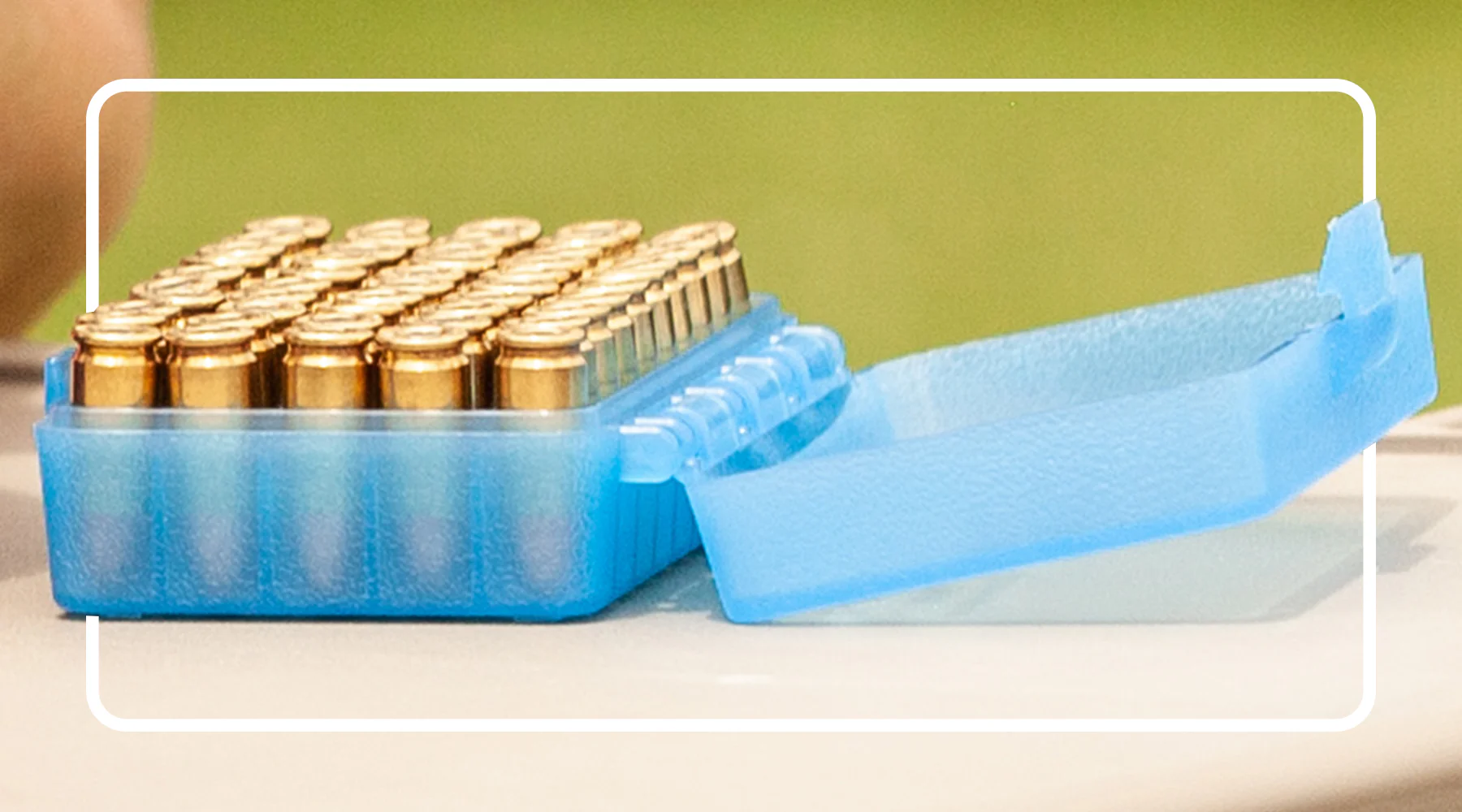
How to Store 10mm Ammo Safely for Long-Term Use
Proper cartridge care starts with the right container and a secure indoor location. A dedicated cabinet protects each box from accidental access, environmental exposure, and unnecessary handling. It also keeps different loads organized for future range sessions.
Long-term protection for 10mm ammo works best when factory cartons sit inside sealed ammunition cans or purpose-built cases. These containers should remain inside a lockable cabinet or secure safe located in a dry, temperature-controlled room. The sections below explain how to select suitable equipment, arrange each box, maintain clear records, and check the supply over time.
Use a Lockable Cabinet or Secure Safe
A lockable ammunition cabinet creates a controlled area for an entire collection. A secure safe can serve the same purpose when it provides enough room for labeled boxes and sealed containers. Place the unit in an interior area with steady temperature levels and limited humidity.
Avoid garages, sheds, attics, vehicle trunks, and other spaces exposed to sharp climate changes. Keep the cabinet away from heaters, direct sunlight, plumbing lines, solvents, and household chemicals. Position it on a dry, raised surface instead of placing it directly against concrete walls or floors.
Place Factory Boxes Inside Sealed Containers
Gasket-sealed ammunition cans provide a practical second layer of protection around original cartons. Purpose-built cartridge cases also work well when they close firmly and fit inside the main cabinet without crushing the contents. Select gasket-sealed containers that provide secondary containment and help control relative humidity around the factory cartons.
Keep cartridges in their factory packaging whenever the cartons remain clean and intact. Original boxes display caliber, bullet weight, load type, quantity, and lot details. Avoid combining separate loads inside one loose container, even when the rounds appear similar.
Label Every Can and Maintain an Inventory
Clear exterior labels allow owners to identify the contents without opening several cases. Each label should match the information printed on the original package. This approach reduces handling and keeps product details connected to the correct cartridges.
Useful label information includes:
- Caliber and cartridge designation
- Bullet weight and load type
- Purchase date or lot number
- Quantity inside the container
- Intended range or sporting purpose
Maintain an inventory sheet inside the cabinet or use a secure digital record. Update the quantity after each range visit or new purchase. Accurate records make stock rotation easier and prevent older cartons from becoming forgotten.
Check the Equipment and Rotate Older Boxes
Inspect Seals and Packaging
Review the cabinet, container lids, gasket seals, and factory cartons at reasonable intervals. Confirm that every lid closes correctly and that each seal remains clean and undamaged. Look for moisture marks, corrosion, crushed packaging, dents, or loose components.
Separate any questionable round from the usable collection without attempting to repair or aggressively clean it. A qualified range professional, ammunition retailer, or local authority can explain suitable disposal options. Careful inspections help protect the rest of the supply.
Follow the First-In, First-Out Method
Place earlier purchases near the front of each ammunition can. Use those cartons before opening newer boxes whenever the load suits the planned activity. Return unused rounds only to their correct package when their identity remains certain.
This rotation system keeps 10mm ammo organized by purchase date, load details, and intended use. It also preserves traceability and makes future stock checks more accurate.
Reliable Suppliers Support Better Organization
A specialized online ammunition supplier allows buyers to review available load types, quantities, and intended applications before placing an order. Clearly marked factory packaging then makes each purchase easier to identify once it enters the secure cabinet. Keeping those product details intact supports responsible handling and long-term organization at home.
Safe cartridge care remains an important part of responsible ownership. Suitable containers, controlled access, and stable indoor conditions help preserve each purchase until it is needed. A secure setup provides lasting confidence without making future range preparation complicated.