No-Code Game Maker Benefits for Aspiring Game Creators
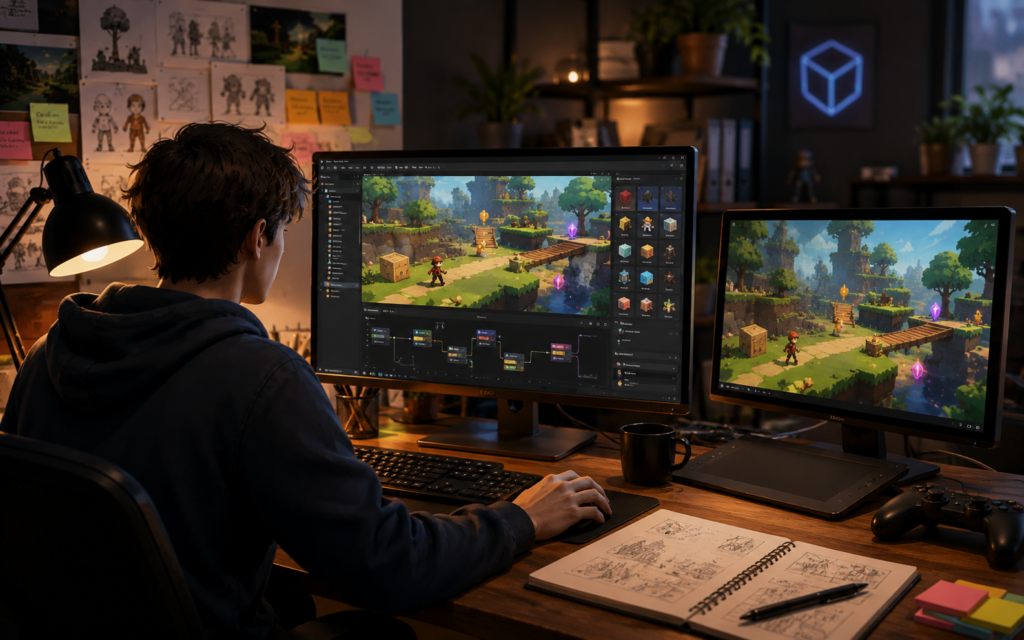
Aspiring creators tend to have one thing in common regardless of background: an idea worth building and no clear starting point for actually building it. A no-code game maker addresses that gap directly, and the benefits go well beyond just “you don’t need to learn to code.” Here’s a genuine look at what these tools actually offer someone starting from zero.
Removing the Technical Learning Curve Entirely
No Programming Language Required
The single biggest benefit is the most obvious one: you never need to learn to code. Traditional development required months, often years, of technical study before you could build anything meaningful. A no-code game maker removes that requirement completely, letting your first meaningful step into game creation happen the same day you have an idea.
Skipping the Intimidation of a Blank Editor
Opening an empty code editor for the first time is genuinely discouraging, there’s nothing to react to, nothing to build from. Starting instead with a description that generates something playable almost immediately replaces that intimidation with something far more encouraging: a working version of your idea you can actually respond to.
Testing Your Interest Without a Major Commitment
Finding Out Quickly If Game Development Suits You
Aspiring creators often aren’t sure whether they’d genuinely enjoy the process of building games. A no-code game maker lets you find that out within a single afternoon instead of after months of technical study, which means the decision to keep pursuing this path becomes far less risky.
Low Cost of Trying and Abandoning Ideas
Because generating a rough version costs relatively little time, you can freely try concepts that might not work out without feeling like you’ve wasted significant effort. That freedom to experiment matters enormously for someone still developing a sense of what kinds of ideas they actually enjoy building.
Building Real Design Skill From the Start
Immediate Feedback Builds Intuition Faster
Because you can test an idea and see the result almost right away, you develop a sense of what works and what doesn’t far more quickly than a slower, more manual process would allow. That fast feedback loop is genuinely valuable for building the kind of design intuition that carries into every future project.
Focusing Entirely on Design, Not Debugging
Without technical implementation eating your attention, all of your focus as an aspiring creator goes toward the actual creative questions, is this fun, is this fair, is this paced well, rather than being split between design thinking and unrelated technical troubleshooting.
Producing Genuinely Satisfying Results, Not Just Simple Ones
No-Code Doesn’t Mean Lower Quality
There’s a lingering assumption that no-code results are inherently rougher than hand-coded ones. A game like Formula Mania pushes back on that directly, a tight, well-tuned racing mechanic that feels genuinely polished, not like a simplified stand-in for what “real” development would have produced.
Iteration Still Drives Quality, Regardless of Method
Game maker online platforms make it realistic to refine a game through many rounds of testing and adjustment, the same process that’s always separated good games from mediocre ones. The quality ceiling isn’t set by the tool, it’s set by how thoroughly you’re willing to iterate.
Practical Benefits for Someone Just Starting Out
Faster Path to Something Shareable
Aspiring creators often want to actually show someone their work, not just talk about an idea. A no-code approach shortens the distance to having something real enough to share, which matters enormously for staying motivated through to an actual finish.
Lower Financial Barrier
No-code game makers typically require far less upfront investment than hiring developers or purchasing extensive technical education. That accessibility matters for aspiring creators who want to test a genuine interest before committing significant money to it.
Room to Grow Without Starting Over
As your skills and confidence develop, the same platform that supported your first simple project can typically support increasingly ambitious ones, meaning you don’t need to abandon everything you’ve learned and switch tools entirely as your ideas grow more complex.
What Aspiring Creators Still Need to Bring
A Genuine Idea Worth Pursuing
No tool generates the underlying creative spark. Knowing what makes your concept worth building remains entirely your responsibility, the platform just removes the technical barrier that used to stand between that idea and testing it.
Honesty During Playtesting
Getting real value from a no-code approach still requires playing your own creations honestly and noticing what isn’t working, rather than assuming the first generated version is automatically good because it was fast to produce.
Patience Through Multiple Iterations
Your first version won’t be your best one. Expect to adjust, retest, and refine several times, the same expectation that applies to any form of game development, no-code or otherwise.
Common Concerns Aspiring Creators Have
“Will People Take My Game Seriously If It Wasn’t Coded Traditionally?”
Players judge a game by whether it’s fun, not by how it was built. The method behind a game’s creation has no bearing on whether someone enjoys playing it.
“What If I Want to Learn Traditional Coding Eventually?”
Starting with a no-code approach doesn’t close that door. Having already developed genuine design intuition through a finished project gives future technical learning far more direction and purpose than starting from nothing.
“Is This Just a Simplified Version of Real Development?”
The creative decisions, what makes a mechanic satisfying, how difficulty should escalate, are the exact same decisions any developer makes. A no-code approach removes the unrelated technical labor, not the actual creative work.
Final Thoughts
For aspiring game creators, a no-code game maker offers benefits that go well beyond convenience: a low-risk way to test genuine interest, faster development of real design intuition, and a realistic path to producing something people actually enjoy playing, all without years of technical study standing in the way first.
If you’ve been sitting on a game idea because you assumed you needed to learn to code first, that assumption no longer holds. The tools exist to start today, the only real requirement left is your own willingness to begin.