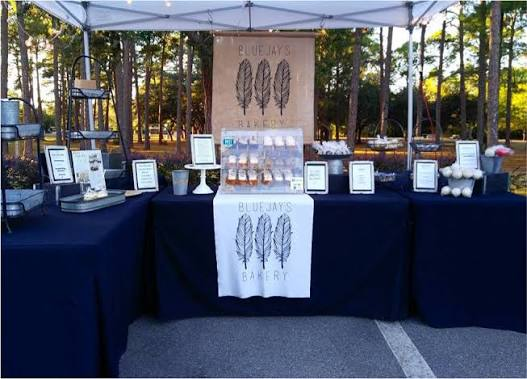
Table Cover Ideas for Pop-Ups and Event Vendors
Your table cover does more work than most vendors realize. It hides your storage bins, sets your brand colors, and gives buyers a reason to walk toward your booth instead of past it. Get it wrong and even a great product lineup looks amateur. Get it right and setup takes five minutes instead of thirty.
This guide breaks down the fabric, fit, and branding choices that matter for pop-up shops, farmers market stalls, trade show booths, and street fairs.
Why the Cover Matters More Than the Table
People form an opinion of a booth before they read a single sign. According to Expo West’s exhibitor guide, it takes only four seconds to make a first impression on an attendee, good or bad. A wrinkled sheet or a mismatched cloth uses up that window on the wrong message.
This is where fitted, branded covers earn their cost. Vendors who invest in custom table covers get a consistent look across every event, no matter who’s working the booth or what table the venue provides. The cover becomes a moving billboard instead of an afterthought.
Fabric Choices That Actually Hold Up
Not all table cover fabric performs the same way outdoors or under heavy foot traffic. Here’s what to look for:
- Polyester poplin: Lightweight, wrinkle-resistant, and the standard choice for indoor trade shows. Runs around 6 oz per square yard.
- Polyester twill: Heavier weave, holds shape better in wind, and resists snagging. Good for outdoor markets.
- Spandex/Lycra blends: Stretch-fit covers that hug the table for a tailored look. Best for four-sided display tables.
- Vinyl or laminated poly: Wipeable and waterproof. Useful for food vendors or anyone dealing with spills.
Weight matters as much as material. Anything under 200 GSM will show every seam and shadow underneath. For outdoor use, check the fabric’s UV resistance rating too. Cheap dye fades within a season of direct sun exposure.
Sizing and Fit for Tables You Don’t Own
Most event vendors don’t control which table they get. Venues supply 6-foot or 8-foot rectangular tables, and sizes vary by a few inches between suppliers. This is where fit becomes a real problem.
Three standard drop lengths solve most situations:
- Full-length drop (to the floor): Hides all storage underneath. Standard for trade shows.
- Lap-length drop (about 6 inches above the floor): Easier to walk around, common at street fairs.
- Fitted/stretch style: No drop at all, wraps the table like a sleeve. Fastest to set up and least likely to blow around outside.
If you work multiple event types, a fitted stretch cover in one size and a full-length throw cover in another gives you flexibility without buying five different pieces.
Branding Options Worth the Cost
Printing on a table cover is not the same as printing on a t-shirt. The imprint needs to survive folding, packing, and repeated setup without cracking.
Dye sublimation printing is the standard for full-color, edge-to-edge branding. The ink becomes part of the fabric fibers instead of sitting on top, so it won’t peel or flake after repeated use. Screen printing works fine for one or two-color logos and costs less upfront, but it’s a poor choice for photographic or gradient designs.
Keep logo placement in mind before you order. A logo centered on the front panel reads clearly from a distance. A logo placed only on the top surface gets blocked by product displays within minutes of setup.
Storage and Setup Time
A cover that takes ten minutes to iron before every event will eventually get skipped. Look for wrinkle-release fabrics that pack flat and shake out clean. Zippered table covers close around the legs, which keeps them from shifting during a busy event, but they take longer to remove than throw-style covers.
If you’re running back-to-back events on tight schedules, prioritize speed over polish on setup day. A slightly less tailored cover that goes on in ninety seconds beats a perfect one that eats into your load-in window.
Quick Checklist Before Your Next Event
- Confirm the table size and shape at your venue in advance
- Match fabric weight to indoor or outdoor conditions
- Choose a drop length based on storage and walking space needs
- Order branding in a format that survives repeated packing
- Test the setup time at home before event day
A table cover is a small line item in an event budget, but it shapes the first impression buyers get of your booth. Treat it like part of the product, not an accessory.